Why Your Social Media Is Getting Attention but Not Clients
Why Your Social Media Is Getting Attention but Not Clients
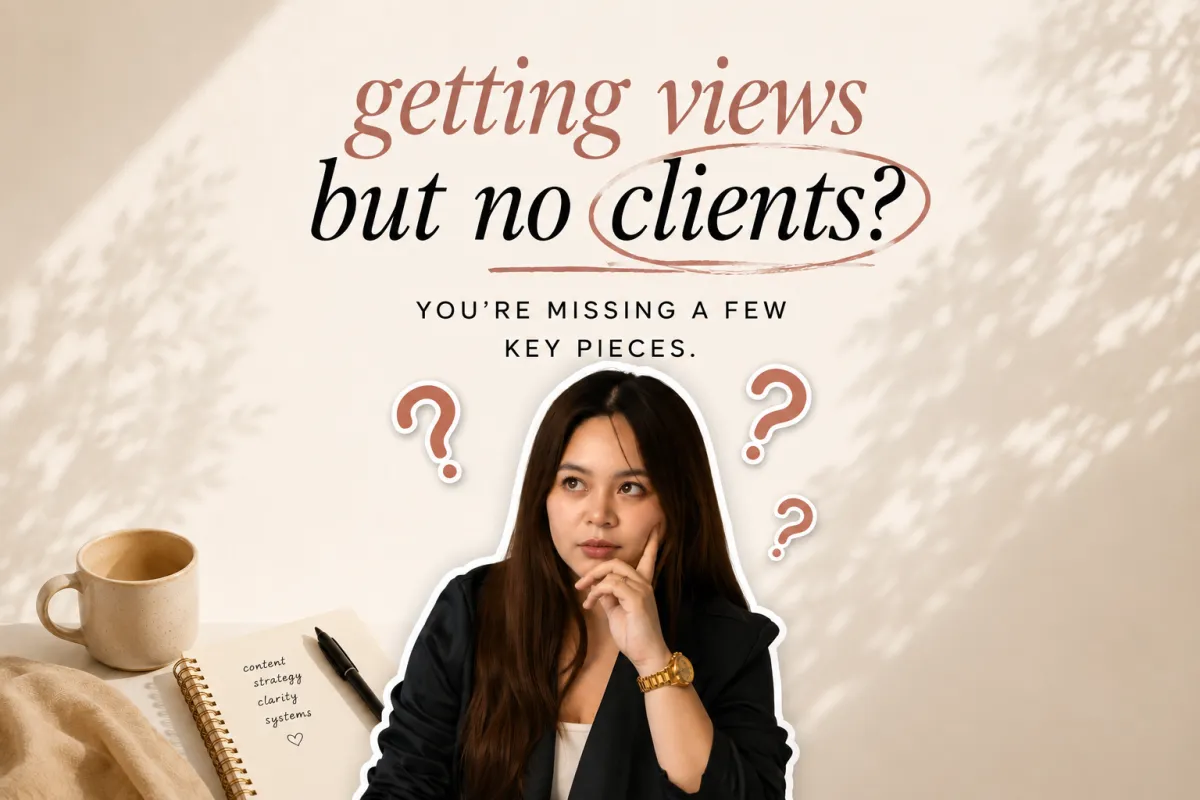
Your posts are getting views. People are liking your Reels. Your follower count might even be growing.
Sooo... why isn't anyone actually booking?
You check your insights and everything looks good. Reach is up. Engagement is decent. People are watching.
But when you look at inquiries, booked calls, appointments, or actual sales?
Crickets.
And I meaaaannnn... that's the part we're here for, right?
This is where a lot of businesses get stuck with social media marketing. Because technically, your content is working. It's getting attention.
The problem is that attention and conversion are not the same thing.
And no, the answer isn't automatically to post 3x more, jump on every trending audio, or suddenly start posting seven days a week.
Sometimes the real problem is what happens after someone notices you.

1. Your Content Gets Attention, but It Doesn't Create Intent
A Reel can get 20,000 views and still bring in exactly zero qualified inquiries.
Painful, but true.
Because content that makes someone stop scrolling isn't automatically content that makes them think:
"Wait. This is exactly what I need."
Trends, relatable posts, pretty graphics, aesthetic B-roll, and entertaining videos can absolutely help your reach.
But if that's most of your strategy, people might enjoy your content without ever understanding why they should work with you.
And that's a biiiiig difference.
Your content needs different jobs.
Some posts are there to get attention.
Some should show that you actually know what you're talking about.
Some should answer the questions your potential clients are already asking.
Some should address the little doubts stopping them from taking action.
Some should make the right person think,"Okay wow, they GET it."
Not every post needs to sell something.
Actually... please don't make every post sell something.
But your content should give people enough information to understand what you do, who you help, and why any of it matters to them.

2. You're Talking About Your Service Instead of Their Problem
This one happens alllll the time.
Businesses naturally create content from their own perspective.
"Our new service is available!"
"Here's what's included in our package!"
"Here's our process!"
"Here's our methodology!"
And sure, those things matter.
But your potential client is probably sitting there thinking:
"Okay... but can you fix my problem?"
That's it.
That's the question.
A business coach might be posting about their six-week coaching program while their ideal client is Googling why they feel completely overwhelmed running a business that was supposed to give them more freedom.
A dentist might be explaining the technical details of a treatment while the patient is thinking,I literally hate smiling in photos.
A wellness professional might be talking about their methodology while their audience is wondering why they've tried everything and still don't feel better.
See the difference?
Your audience usually cares about the problem before they care about the name of your solution.
So instead of constantly asking:
"What should we post about our service?"
Try asking:
"What is our ideal client dealing with right before they realize they need us?"
Oof.
That's where the good content is.
3. Your Profile Makes People Work Too Hard
Someone finds one of your posts.
They like it.
They tap your profile.
You now have a few seconds before they decide whether they care enough to stay.
Can they immediately tell what you do?
Who you help?
What problem you solve?
Where you're located, if location matters?
What they should do next?
Because people are not going to conduct a full investigation into your business.
They're not sitting there with coffee and a notebook like:
"Okay, let me analyze these 47 posts and determine what exactly this company does."
Noooope.
They're skimming.
Your bio. Your pinned posts. Maybe your highlights. Maybe six posts on your grid.
And then they're making a decision.
Stay or leave.
Your profile should make that decision easy.
Clever branding is great.
Aesthetic feeds are great.
But clarity?
Clarity wins.
4. You're Missing the Entire Middle of the Customer Journey
A lot of social media strategies basically look like this:
Post content → "BOOK NOW!!!"
Ummmm... we skipped a few steps.
Most people don't see one Reel from a business they've never heard of and immediately hand over their credit card.
Sometimes they do.
We love those people.
But most don't.
Someone might find you through a Reel today.
Then visit your profile.
Then forget about you.
Then see another post three days later.
Then read your website.
Then disappear again.
Then stalk your testimonials.
Then join your email list.
Then finally send an inquiry three weeks later.
This is normal.
People need different amounts of information, trust, and reassurance before they're ready to buy.
Your marketing should support that.
Educational content.
Testimonials.
Case studies.
FAQs.
Emails.
Helpful resources.
Clear service pages.
A booking process that doesn't make someone click through seventeen different things.
All of these pieces help move someone from:
"Who is this?"
to
"Hmm, I like them."
to
"They know what they're doing."
to
"Okay. I'm ready."
Social media shouldn't have to carry that entire journey by itself.

5. Your Call to Action Is Too Big for Where They Are
"BOOK A CALL."
"BOOK NOW."
"APPLY TODAY."
Again.
And again.
And again.
Listen, sometimes that's exactly the CTA you need.
But someone who discovered your business approximately 14 seconds ago might not be ready for all that.
It's like meeting someone and immediately asking them to move in.
Maybe coffee first???
Different people need different next steps.
Someone new might be ready to read another post, visit your website, save a guide, check your results, join your email list, or ask a question.
Someone who's been quietly following you for six months?
Yeahhhh, maybe it's time to book.
Your CTA should match the content and the reader's level of awareness.
Not every road needs to lead immediately to BUY NOW.
Sometimes the goal is simply getting them to take the next step.
6. Your Instagram and Website Feel Like Two Different Businesses
You find a gorgeous brand on Instagram.
Everything feels polished.
Intentional.
Professional.
You click their website and...
Oh.
Oh no.
Different messaging. Different vibe. Confusing pages. Broken links. Maybe a contact form that looks like it hasn't been touched since 2014.
Instant disconnect.
Your brand doesn't end when someone leaves Instagram.
Your social media, website, landing pages, emails, booking process, and client communication are all part of the same experience.
And consistency doesn't just mean using the same beige color everywhere.
It's the message.
The tone.
The positioning.
The experience.
The level of professionalism.
Everything should feel like it belongs to the same business.
Because when it doesn't, people hesitate.
Even when they can't quite explain why.

7. You Might Actually Be Getting Leads... and Losing Them
Plot twist.
Your social media might be doing its job.
The problem could be what happens afterward.
Someone fills out your form.
Someone sends a DM.
Someone asks about pricing.
Someone downloads your free resource.
Someone says, "I'll think about it!"
And then...
Nothing.
Nobody follows up.
The inquiry gets buried.
Someone forgets to reply.
Three weeks later you're scrolling through messages like:
"WAIT. Did anyone ever respond to Sarah???"
We've seen it.
This is where systems matter.
Inquiry confirmations, appointment reminders, CRM pipelines, email sequences, and follow-up workflows aren't necessarily the exciting part of marketing.
But whewww, do they matter.
Because generating more leads won't fix a business that's already losing the ones it has.
Social media starts conversations.
Your systems make sure those conversations actually go somewhere.
So... Should You Stop Caring About Engagement?
Noooo.
Engagement still matters.
Reach, views, saves, shares, comments, profile visits, and follower growth can all tell you something about your content.
Just don't let those numbers become theentiredefinition of success.
Look at what happens next.
Are people visiting your website?
Are the right people following you?
Are potential clients asking questions?
Are inquiries increasing?
Are inquiries turning into appointments?
Are appointments turning into clients?
Because 100,000 views look amazing on a screenshot.
But if none of those people are remotely interested in what you sell...
I meaaaannnn.
You get it.
A smaller audience filled with the right people can be far more valuable than a massive audience that just watches.
Social Media Was Never Supposed to Do Everything
This is probably the biggest takeaway.
Your social media is one piece of your marketing.
It creates awareness.
Your branding makes you recognizable.
Your content builds trust.
Your website gives people somewhere to evaluate you.
Your systems make taking the next step easier.
Your follow-up keeps good opportunities from disappearing into the void.
When all of those pieces work together, your content doesn't need to scream:
"PLEASE BUY FROM US."
Every. Single. Day.
Instead, you're building a path that makes sense.
Someone sees you.
They understand you.
They remember you.
They trust you.
And when they're ready?
They know exactly where to go.
So if you're getting attention but not getting clients, don't immediately assume you need more content.
Look at the journey after the content.
Because sometimes your social media isn't the problem at all.
Not Sure What to Fix First?
If you read this and thought,okayyy... I know something isn't working, but where do I even start?
We made something for that.
The Content-to-Client Fix is a practical DIY guide to help you figure out where your social media is losing potential clients and what to fix first.
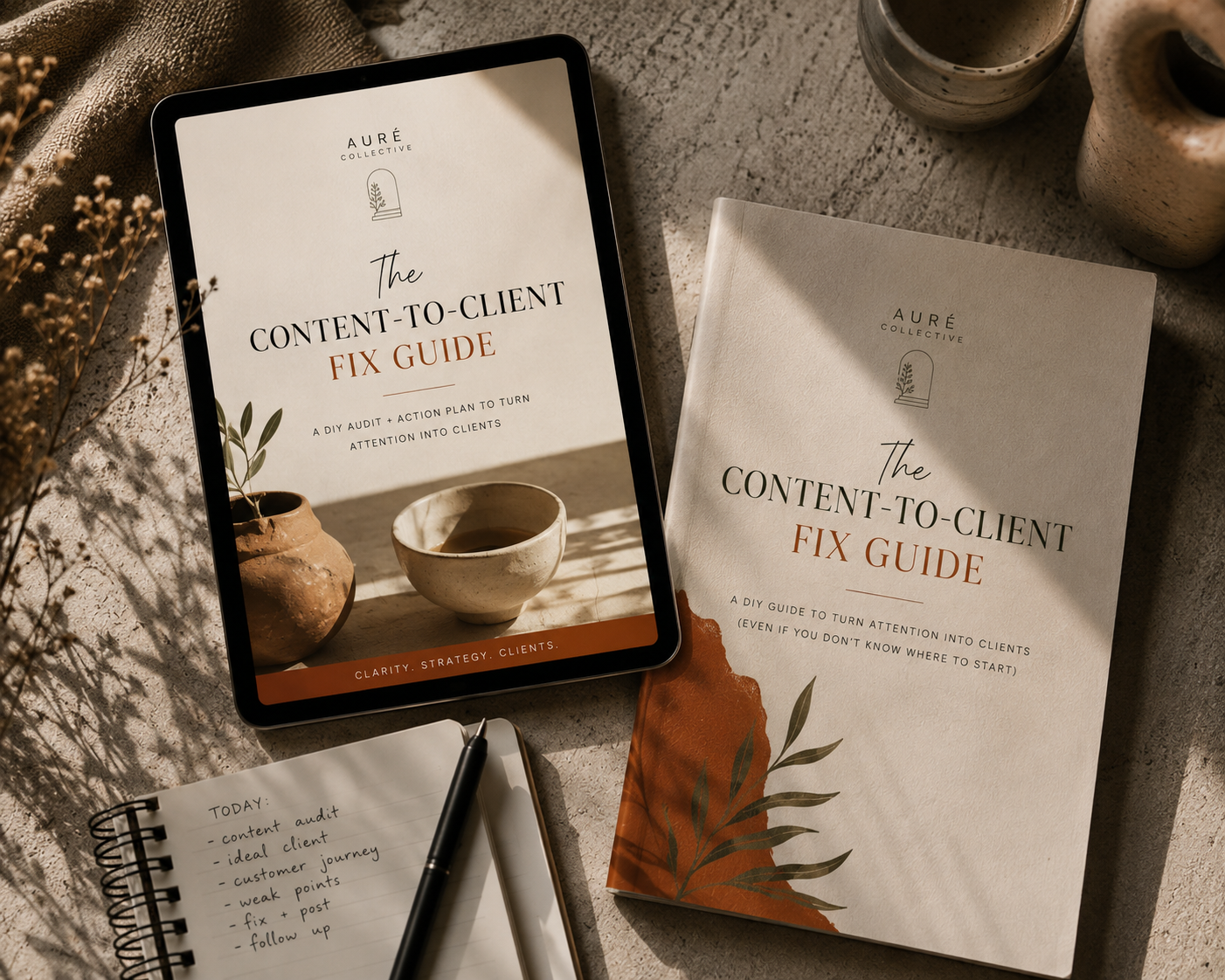
No complicated marketing strategy. No 87-page ebook you'll save and never open again.
Just the worksheets, checklists, and steps you need to look at your content, profile, customer journey, and follow-up with fresh eyes.
$10. Yours to keep. Do it at your own pace.
[GET THE $10 GUIDE]